Showing posts with label human rights. Show all posts

Tuesday, July 14, 2015

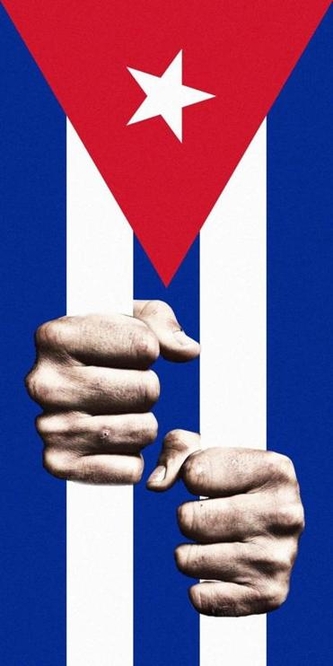
Cubans pay price for Obama-Castro engagement

by Jeff Jacoby at The Boston Globe

On July 1st, President Obama announced the formal resumption of diplomatic relations with Cuba, asserting confidently that "American engagement ... is the best way to advance our interests and support for democracy and human rights."

On July 5th, the Communist regime in Havana delivered its customary response. It arrested more than 80 democratic dissidents, including at least 60 members of Ladies in White, a peaceful group of brave women who march weekly in support of husbands, fathers, and other relatives imprisoned in the Castros' jails.

Many of those detained were hurt, some severely. One prominent human-rights activist, Antonio Rodiles, was sent to the hospital with a shattered nose; he had reportedly been handcuffed by security forces, then beaten for shouting "Long live freedom" and "Long live human rights."

There had been even more arrests and beatings in the days leading up to Obama's Rose Garden statement. Some 225 Cuban dissidents across the island were arrested the previous Sunday, with Ladies in White again prominent among those targeted.

In fact, there have been police actions against Cuban democrats for 12 Sundays in a row — the government makes a point of going after dissidents as they walk to Mass or emerge from church holding photos of imprisoned loved ones.

Like most US advocates of normalizing relations with the only all-out dictatorship in the Western Hemisphere, Obama claims that warming up to the Castro regime is the most effective way to promote freedom and liberal reform in Cuba. When he announced last December that ties between Havana and Washington were going to be restored, the president declared that "we can do more to support the Cuban people and promote our values through engagement."

Now, nearly seven months later, he reiterates "America's enduring support for universal values, like freedom of speech and assembly," and he insists that his administration "will not hesitate to speak out when we see actions that contradict those values."

No? Over the past seven months, life for Cuba's people has grown even more oppressive and unfree. Yet far from forthrightly condemning the brutality, Obama serenely counsels patience: "Nobody expects Cuba to be transformed overnight," he says.

There have been more than 3,000 political detentions on the island since last December, according to The Washington Post. The paper quotes Mario Felix Lleonart, a Cuban Baptist pastor who laments that he, like many, "had hoped, following the announcement about normalizing relations between the US and Cuba, that there would be a stop to — or at least a lessening of — the beatings" of dissidents. "We now know that what is happening is precisely the opposite."

The policy that Obama now embraces is also "precisely the opposite" of the one he feigned to uphold as a candidate for president.

Like opposing same-sex marriage and guaranteeing that Americans could keep their health plan if they liked it, Obama reversed course on normalizing relations with Cuba, which he was clear could only come after, not before, "significant steps towards democracy." Once upon a time, Obama maintained that there would be no American embassy in Havana until all of Cuba's political prisoners were free.

Now he trumpets John Kerry's forthcoming trip to Havana "to proudly raise the American flag over our embassy once more," even as Cuba continues to lock up men and women for daring to seek the democratic liberties Americans take for granted.

The Obama administration is bestowing tremendous gifts on Cuba's rulers: diplomatic legitimation, a public-relations triumph, an influx of hard currency, and expanded influence in Washington. All this the Castros are getting in exchange for nothing: no elections, no free press, no end to beating of peaceful protesters, no justice for the many victims of Cuban totalitarianism.

"Castroism has won," mourned the Cuban dissident Yoanni Sanchez last winter, when Obama announced an end to America's principled policy on Cuba. If it wasn't obvious then, it is now.

_________________________________________

Become a Truth Serum Partner Now


Monday, May 11, 2015

When U.S. troops leave too soon

From the files of Jeff Jacoby at The Boston Globe

Desperate civilians try to board an American plane out of Saigon, April 1975.
Millions of victims would lose their lives or their freedom after South Vietnam
 and Cambodia fell to the communists
.

Last month marked the 40th anniversary of the fall of Saigon, a moment vividly encapsulated by the frenzied scene of South Vietnamese desperately trying to reach the last helicopter on the roof of the American embassy. April was also the 150th anniversary of the surrender at Appomattox, when Robert E. Lee capitulated to Ulysses S. Grant, bringing the bloodiest fighting of the Civil War to an end.

The two episodes seemingly have little to do with each other. But each, in its way, illustrates one of the bleakly recurring themes of US military history: When America's armed forces prematurely abandon the field, the results are usually heartbreaking for the people they leave behind.

The Vietnam experience makes the point with aching sorrow. By 1972, the US war against the North Vietnamese communists was being won on the ground; it was lost in Congress and at the Paris peace talks under the political pressure of the antiwar movement.

The United States pulled its fighting troops from Vietnam in 1973, then refused to provide its South Vietnamese allies with the economic and military aid they needed to resist Hanoi's onslaught. As disaster loomed, President Ford implored Congress not to turn a blind eye to the "vast human tragedy" about to engulf "our friends in Vietnam and Cambodia."

But hostile lawmakers refused to heed Ford's pleas, and 40 years ago this spring the communists swept to power. What ensued was horrific. "Millions of people lost their lives and tens of millions lost any chance at freedom," Robert F. Turner, co-founder of the Center for National Security Law at the University of Virginia, recalled in a recent essay.

In Cambodia, the fanatical Khmer Rouge slaughtered an estimated 1.7 million men, women, and children. In neighboring South Vietnam, there were hundreds of thousands of additional victims — frantic "boat people" trying to escape by sea, inmates tortured in re-education camps, innumerable others summarily executed or "disappeared."

To the shock of at least some former antiwar activists, more people died in the first two years of Indochina's communist peace than had lost their lives in the 13 years of America's war. Even now Vietnam remains a communist dictatorship, one of the least free places on earth.

When US forces settle in for a long peace after fighting a difficult war — as in (West) Germany and Japan following World War II, or South Korea since the 1950s — their presence has generally nurtured stability, prosperity, and democratic freedoms. When they retreat precipitately — as in Lebanon or Iraq — renewed cruelty and violence predictably fill the vacuum.

And it isn't only overseas that the pattern has been manifested.

In a striking new book, After Appomattox, historian Gregory Downs chronicles the years of military occupation that followed Lee's surrender to Grant in 1865 — a military occupation that was indispensable to the uprooting of slavery and the political empowerment of freed slaves.

In the face of Southern white supremacist hostility, it was only the continuing presence of federal troops in the South that could break up remaining pockets of rebellion, establish the right of blacks to vote and seek election, void discriminatory laws, and unilaterally remove disloyal or racist sheriffs and judges from office.

But there were far too few troops to do the job properly. With the end of battlefield fighting, pressure to "bring the boys home" was intense. By the end of 1866, fewer than 25,000 troops remained in the South — down from nearly 1 million at the time Lee surrendered. Meanwhile, a violent white insurgency was spreading, led by a Democratic Party terror group called the Ku Klux Klan. These insurgents "spread across the South," Downs writes, "assassinating Republican leaders and intimidating black voters."

Contrary to popular belief, Gen. Lee's surrender at Appomattox Court House didn't end the
 Civil War. Though battlefield clashes ceased, several years of military
occupation were to follow
.

Where the US military held sway, Reconstruction legislatures made remarkable gains — funding schools and hospitals, reforming property and marriage laws, making possible the election to office of more than 1,500 black candidates. But those gains were swept away as it became clear that Washington would not deploy the troops necessary to crush the Klan terror.

Public support for continuing the occupation evaporated. By the late 1870s, the troops were effectively gone. Southern Democrats moved ruthlessly to roll back the astonishing progress in black civil rights; in its place they imposed poll taxes, literacy tests, and racial segregation. "Without the fear of federal [military] power," recounts Downs, "a new and bleak era of Jim Crow was dawning."

Military occupation and the prolonged exercise of war powers go against the American grain. The urge to "declare peace and get out" is only too understandable. This season of anniversaries is a reminder that yielding to that urge can come at a terrible price, above all to those who remain after the US military is gone.
_____________________________

Become a Truth Serum Partner Now


Friday, April 17, 2015

The Armenian genocide was also a jihad

From the files of Jeff Jacoby at The Boston Globe

Pope Francis embraces Catholicos Karekin II, the spiritual leader of the Armenian
Apostolic Church, during a mass in St. Peter's Basilica marking the
100th anniversary of the Armenian genocide
.

Unlike some of Pope Francis's other headline-generating pronouncements, his description of Turkey's mass murder of 1.5 million Armenians during World War I as "genocide" was anything but inadvertent.

Speaking at the Vatican during a Sunday mass to mark the centenary of the slaughter, the pope said it is "widely considered the first genocide of the 20th century" — a quote from Pope John Paul II, who used nearly the same words in 2001. But Francis went further, equating the destruction of the Armenians to the Nazi Holocaust and the Soviet bloodbaths under Stalin.

And he linked the genocidal Ottoman assault on Armenia, the world's oldest Christian nation, with the epidemic of violence against Christians today, especially by such radical Islamist terror groups as ISIS, Boko Haram, and al-Shabaab.

Turkey reacted angrily, recalling its ambassador to the Vatican and accusing Francis of distorting history and spreading prejudice. On Twitter, the Turkish foreign minister denounced the pope for fueling "hatred and animosity" with his "unfounded allegations."

That was no surprise, given the government's vehement history of denialism on the subject. To this day, the use of the word "genocide" to describe the killing of the Armenians is a criminal offense in Turkey, and Turkish diplomats labor mightily to defeat genocide-recognition efforts worldwide.

The journalist Thomas de Waal wrote recently in Foreign Affairs that "no other historical issue causes such anguish in Washington." The political debate over "the G-Word" has consumed countless hours, even as the historical debate — as the pope suggested — has been largely resolved. As de Waal explains, Turkey is so adamant for reasons both material and psychological.

Some Turkish politicians fear that acknowledging the Ottoman-perpetrated genocide could trigger claims for financial reparations or territorial concessions. But beyond that is "the emotive power of the word," which was coined in the wake of the Holocaust and is indelibly linked in the public mind with the absolute evil of the Final Solution.

"No one willingly admits to committing genocide," writes de Waal, and many Turks seethe at "being invited to compare their grandparents to the Nazis."

Yet Turkish authorities weren't always so reluctant to accurately label the genocidal evil unleashed against the Armenians a century ago.

Talaat Pasha, the powerful Ottoman interior minister during World War I, certainly didn't disguise his objective. "The Government … has decided to destroy completely all the indicated [Armenians] persons living in Turkey," he brusquely reminded officials in Aleppo in a September 1915 dispatch. "An end must be put to their existence … and no regard must be paid to either age or sex, or to conscientious scruples."

Read the Jacoby Column
US Ambassador Henry Morgenthau, flooded with accounts of the torture, death marches, and butchery being inflicted on the Armenians, remonstrated with Talaat to no avail. "It is no use for you to argue," Morgenthau was told. "We have already disposed of three quarters of the Armenians…. The hatred between the Turks and Armenians is now so intense that we have got to finish them. If we don't, they will plan their revenge…. We will not have the Armenians anywhere in Anatolia."

If some of them survived, it wasn't for lack of effort by the killers. Of the roughly 2 million Armenians living in the country in 1914, 90 percent were gone by 1918.

The death toll was well over one million; innumerable others fled for their lives. To read eyewitness descriptions of the ghastly cruelties the Armenian Christians were made to suffer a century ago is to be reminded that the jihadist savagery of ISIS and al-Qaeda is not an innovation.

That key fact is one the pope, to his credit, refuses to downplay: Armenians were victims not only of genocide, but also of jihad. In imploring his listeners on Sunday to hear the "muffled and forgotten cry" of endangered Christians who today are "ruthlessly put to death — decapitated, crucified, burned alive — or forced to leave their homeland," Francis was reminding the world that the price of irresolution in the face of determined Islamist violence is as steep as ever.

The jihadists of 1915 murdered "bishops and priests, religious women and men, the elderly, and even defenseless children and the infirm." The world knew what was happening; the grisly details were extensively reported at the time. Just as they are now, and with as little effect.
______________________________________________

Become a Truth Serum Partner Now

Wednesday, January 28, 2015

Spare the blogger and lash us instead

Spare the blogger and lash us instead by Jeff Jacoby at the Boston Globe

On January 9th, the government of Saudi Arabia publicly whipped a liberal Muslim writer, Raif Badawi, flogging him 50 times outside a mosque in Jeddah.

It was the first installment of the 1,000 lashes to which Badawi had been sentenced — in addition to 10 years in prison and a fine of more than $250,000 — for the crime of "insulting Islam" on his former website, the Saudi Free Liberals Forum.

Two days later, following the Charlie Hebdo massacre, the Saudi ambassador to France joined in the great Paris solidarity march in defense of freedom of expression.

Such hypocrisy was more than seven members of the United States Commission on International Religious Freedom could abide. The commission — an independent, bipartisan federal agency — had several times expressed concern about the persecution of Badawi; it denounced his lashing as "a cruel and barbaric act" inflicted "for nothing more than creating an online forum for diverse views to be expressed freely."

Last week, writing in their individual capacities to the Saudi embassy in Washington, the seven commissioners drew attention to the glaring inconsistency between Saudi Arabia's public show of support for civil liberties in France and its brutal denial of those very liberties in Badawi's case.

Then, in a powerful demonstration of genuine solidarity, they offered to share personally in his flogging.

"If your government will not remit the punishment of Raif Badawi, we respectfully ask that you permit each of us to take 100 of the lashes that would be given to him," they wrote. "We would rather share in his victimization than stand by and watch him being cruelly tortured."

The signatories are as intellectually distinguished as they are religiously and politically diverse. They include Mary Ann Glendon, a Harvard law professor and former ambassador to the Vatican; Zuhdi Jasser, a physician and founder of the American Islamic Forum for Democracy; Robert George, a notable public scholar and professor of jurisprudence at Princeton University; and Eric Schwartz, a former assistant secretary of state who is now dean of the University of Minnesota's school of public affairs.

Another commissioner, Daniel I. Mark, is a political scientist at Villanova University; Hannah Rosenthal is president of the Milwaukee Jewish Federation; and Katrina Lantos Swett, the commission chairman, heads an international human-rights foundation.

Of course, the chances are nil that the Saudis will agree to administer lashes to prominent American thinkers and social activists. But that doesn't make the commissioners' willingness to share in Badawi's suffering insincere.

"If you're a serious religious person, you don't make such an offer unless you're prepared to carry it out," George told me. The same conviction was expressed by Mark, who in a blog post titled "#IAmRaif" wrote that he had been thinking hard about "what it means to sacrifice for others, to go to the Cross, as some might say, in the fight for justice."

Vocal appeals in support of Badawi have come not just from the American commissioners, but also from Nobel laureates, from Amnesty International, from members of Congress, and from PEN, the international writers' organization. But from the president of the United States there has so far been only silence.

President Obama cut short his state visit to India this week so he could travel to Saudi Arabia to pay his respects to the deceased King Abdullah. Yet "the Saudi who should be on the president's mind and heart right now," George insists emphatically, "is not Abdullah, it is Raif Badawi — the brutalized freedom advocate who has become the living symbol of the oppression practiced by Saudi Arabia's rulers."

Protesters hold a vigil for Raif Badawi outside the Saudi embassy in London. The 31-year-old
Muslim moderate has been sentenced to 1,000 lashes and 10 years in prison as
punishment for setting up a website, the Saudi Free Liberals Forum.

Obama's silence is a source of particular distress to Jasser, a faithful Muslim who since 9/11 has made opposition to radical Islam his life's mission. "Everybody asks why more moderate Muslims don't speak out against the poison of Islamism," Jasser said by phone the other day.

"Well, Badawi's ordeal is a clinic in what happens when they do." It would so hearten reformers and moderates within Islam, he says, if the president would publicly express concern for liberals like Badawi — the way Ronald Reagan made a point of mentioning Soviet refuseniks like Natan Sharansky by name.

Realpolitik may require an ongoing US relationship with the Saudis. But Americans are not obliged to pretend that Saudi Arabia — where liberals are whipped, dissidents are tortured, and jihadists are incubated — isn't one of the world's leading producers of intolerance and fanaticism.

Badawi and others like him are the antidote to those toxins. They need all the solidarity we can give them.
______________________________________________

Become a Truth Serum Partner Now

Monday, December 22, 2014

A happy Christmas for the Castros

A happy Christmas for the Castros from Jeff Jacoby at the Boston Globe

Normalized diplomatic ties with the United States will give the
Castro brothers even more reasons to smile. But President
Obama's sharp change in policy won't bring liberty any
nearer for Cuba's 11 million people.
After five years in a Cuban dungeon, American aid contractor Alan Gross was finally freed Wednesday, his release part of a deal to restore full diplomatic relations between the United States and Cuba.

But there will be no freedom for the many thousands of Cuban citizens locked in the Castros' prisons — not even after a US embassy is reopened in Havana.

The United States has always had diplomatic ties with nasty regimes. In that sense, President Obama's announcement last week that he intends to normalize relations with Cuba merely adds another to the list. But Cuba isn't just another dictatorship.

To begin with, it is the only remaining totalitarian state in the Western Hemisphere. The Castro brothers' regime "continues to repress individuals and groups who criticize the government or call for basic human rights," notes a recent Human Rights Watch summary of conditions on the island.

"Officials employ a range of tactics to punish dissent and instill fear in the public, including beatings, public acts of shaming, termination of employment, and threats of long-term imprisonment."

There is no freedom of speech or religion in Cuba, no due process of law, no right to criticize the government. Nor is there any right to leave, which is why so many Cubans have lost their lives at sea, drowning in desperate attempts to escape.

If the president's abrupt shift of policy were part of an American strategy to topple such an odious dictatorship, it might be defensible. Unfortunately, it is hard to see this as anything but one more iteration of the Obama administration's idea of statecraft: Accommodate the world's worst actors and consciously reduce America's clout in shaping international opinion.

The Cuban regime is one of the few with which Washington severed ties on a fundamental matter of principle, having first welcomed its accession to power. The United States initially supported the Castro revolution — early in 1958 the Eisenhower administration imposed an arms embargo against Cuban dictator Fulgencio Batista, and it swiftly recognized the new government in 1959.

It wasn't until 1961 that President Eisenhower cut diplomatic relations with Havana, and that was only after Castro had seized private property and nationalized (read: stole) billions of dollars' worth of assets belonging to US companies in Cuba. More than half a century later, that massive larceny is still not repaid.

Obama dismisses this as mere history. He pooh-poohs the relevance of a policy "rooted in events that took place before most of us were born."

Yet as a candidate for president, Obama vowed that his policy toward Cuba would "be guided by one word: Libertad." He bent over backward to stress that while he favored engagement, there would be no quid of normalization until there was a quo of democratization: "Don't be confused about this," Obama told voters in Florida

"I will maintain the embargo. It provides us with the leverage to present the regime with a clear choice: If you take significant steps toward democracy, beginning with the freeing of all political prisoners, we will take steps to begin normalizing relations. That's the way to bring about real change in Cuba."

That was then, this is now. As in almost every other region touched by Obama's foreign policy since 2009, liberty in Cuba has made no gains. Leverage has not been deployed. Political prisoners remain behind bars. And significant steps toward democracy remain a fantasy.

Obama isn't the first president to find ways to ease trade and travel sanctions against Cuba. But the increased business — US agricultural exports to Cuba soared from $4 million in 2001 to more than $450 million in 2010 — has mostly entrenched Cuba's rulers.

Easing them further will entrench them even more. That is because the Castro regime, in addition to its other charms, is a criminal syndicate. It controls Cuba's tourism and foreign trade operations much as Al Capone controlled Chicago's liquor rackets.

When foreign currency flows to Cuba, it flows to the dictatorship and its military. As Rich Lowry commented in Politico last week, it is as if the Pentagon owned the Radisson, Marriott, and Hilton hotel chains.

Despite the president's warm-and-fuzzy rhetoric about the Cuban people's right to "live with dignity and self-determination," nothing about this normalization reflects the least concession on Havana's part. For decades, Obama said, the United States has "proudly. . . supported democracy and human rights in Cuba."

But there is no hint that human rights or political freedoms will improve for ordinary Cubans. An end to Communist Party control? Contested elections? An unmolested free press? Don't hold your breath.

Echoing a popular talking point, the president claims that America's longstanding policy toward Cuba hasn't "worked," by which he apparently means that Cuba is still a crude and brutal tyranny. "For more than 35 years, we've had relations with China. . . Nearly two decades ago, we reestablished relations with Vietnam," Obama says — as if that supports, rather than undermines, the notion that normal diplomatic and trade relations with Communist dictatorships will transform them into humane and democratic societies.

Normalization hasn't "worked" in Vietnam or China. Why expect a different outcome in Cuba?

There have always been reasonable arguments on both sides of America's fraught Cuba policy. But there is nothing reasonable about Obama's drastic shift of policy. It amounts to an invaluable gift to the worst regime in the Americas, in exchange for no lasting gain in human rights, democracy, or libertad.

This will be a happy Christmas for the Castros and their courtiers, who are getting something they have long desired. As for their millions of beleaguered subjects, still unfree and impoverished:

They'll have to go on waiting.
_____________________________

Become a Truth Serum Partner Now

Friday, October 17, 2014

American Minds and the Lobotomy of Truth

The American Mind, and the lobotomy of truth from the files of Ken LaRive at the Examiner

The Dog Tags
To understand what is going on in this world is no easy task. Lies are projected into our minds from every side, and this constant barrage of deceit envelops and taints not only our perception of reality, but enslaves us collectively into a state of denial.

Yes, denial, most likely the best mechanism we can use to keep our sanity as human beings, but all of us, seemingly united in what can only be called human nature, just hates to be played the fool... and knowing this, that there is a point where some will say “enough is enough,” solace and hope can still give us a worthy standard of purpose...

A playground bully stealing our lunch money as a kid, feels the same as a government stealing your future as an adult, and most have been taught to turn a blind eye. It is justified, we are told, by a fight or flight response that tells us to choose our battles, even as we are swept along by them.

We have learned to turn a blind eye to the strong currents under the surface of our civilization, undermining the very framework of our Republic... Ignorance is bliss, I’ve heard said laughingly, and we are indeed what we think we are as a product of our environment... Sure, it’s easy to say these idioms, and with feeling too, like they are justifications in their own right. Justifications for the blind faith that not only motivates us, but keeps us safe to fight another day. But the day of reckoning does come, as is witnessed all around the world... when people finally have enough.

Sometimes we think we are just too close to this life to see what it’s really all about. We are so busy, so caught up with our tangled lives that we fail to grasp but a portion of the total picture... Memory is fuzzy, history is distorted by bias, and time just presses on... It’s unsettling when a few pieces of the puzzle emerges after the fact, and we can glimpse, even for just a moment, that our reality has been carefully fed to us, orchestrated, manipulated, influenced, and truth withheld from us with the inflection that we are mindless fools...

Does our life still have meaning if our reasoning rational is found to be based on a lie? Should we feel betrayed if our thoughts were discovered to be manipulated? Could we ever truly trust authority again, knowing we have been used without our knowledge? Are we considered just working fools, beasts of burden, where the forces of power strive to control our thoughts, our behaviors, and what we hold sacred as a nation is treated as if it is all a farce?

Is there such a thing as a noble cause? And is there any cause worth dying for?


It is human nature to try and justify the workings of the world, and yes, to manipulate them with our will. We would like to believe that a young man who goes to war these days has a justified reason to do so. He is placing his life in real danger for a real ideal, isn’t he? Shouldn’t he be there because he sees a noble cause? Shouldn't an ideal come first?

And shouldn't it be strong enough to rouse him, by the passion of honesty and truth, without being manipulated by a lie, or forced by a draft? Shouldn’t war, even a cold war, have a true reason, and shouldn't that reason be based on a justifiable accolade? How can we uphold our actions as a nation when we aren’t informed as to why we take action it in the first place? Would we consent to go to war for the profit of an international war machine? I don't think so... and, without a doubt, that is the reason for the lie!

The light of truth, after the fact

Ronald Reagan is said to be one of the 100 most influential people in the 20th century. As he occupied the White House in the mid-1980’s he accentuated two things that I will attempt to explain here. One, as an ultra-conservative, he implemented a free enterprise fiscal policy, including sweeping tax cuts and deregulation of the oil industry, and two, swore to tip the balance of the cold war.

Mr. Reagan succeeded on both counts, but there was a price to pay, and we Americans in the south, unknowingly, paid for it dearly…

Our southern economy did not entirely survive the 1980’s, we had to start mostly from scratch, as seven of our 10 local banks went belly up... I left three companies, from mergers to bankruptcy, and Louisiana and Texas was devastated. I read the paper every day for information and hope, but oil prices continued to plummet, and good hard-working people lost everything in an avalanche of ruined dreams and hopes. No one I knew could tell me why...

I did what I had to do to survive, as so many oil-field workers did: to keep food on the table. Our wives and children helped pull us through, combining salaries to get by. In 1986 it was so bad that I couldn’t even find a house to paint. I left the states to work in a hotel for two years, displacing my family and leaving my friends behind. I couldn’t sell my house in Crowley for 1/5th of what I still owed on it! I had a bumper sticker that read:”Last one out turn out the lights.”

I blamed myself. If I could have been smarter, stronger, or positioned myself better… I thought that the new environmental liberals had fined the oil companies out of existence. I thought it was a normal correction, but I couldn’t figure out for what! I was wrong. I was too close to it to understand, we all were, and information, the truth, wasn’t published.

Here are a couple of points to ponder:
• Congress did away with tax benefits previously given to oil and gas drilling.
• There were massive and unprecedented tax reforms, by the White House.
• There was an undeniable link between the oil industry, the Saudis, and the eventual collapse of the USSR
.
With no more investment dollars, the oil industry dried up to a burned out shell, and the Soviet Union took it full on the chin. It was a “geopolitical blow” according to the book: Victory: The Reagan Administration’s Secret Strategy that hastened the Collapse of the Soviet Union, by Peter Schweizer.

By the time Mr. Reagan was reelected in 1984, his secret economic strategies were taking its toll against Russia. Credit from the west was gone, and export licenses for technology were denied. Both liquid currency and traded Western technology slowed to a trickle. The Siberian pipeline, expected to bring in hard currency for Russia, was years behind schedule. The Reagan administration frustrated efforts further by a concerted technical disinformation program against them.

These catalysts were in place. “We wanted lower international oil prices largely for the benefit of the American economy.” Said White House counsel Edwin Meese. “The fact that it meant trouble for Moscow was icing on the cake.” To pull this off, they solicited the support of the world’s largest producer of oil, Saudi Arabia... and as we poured over the paper for any sign of reason and hope, nothing of this was mentioned... I may have believed Mr. Meese's words having a morning cup of coffee with other unemployed Mud Men... but not now. His words were lies.

It was easy for the Saudis to do. It only cost about $1.50 back then to produce a barrel of oil, and they could still maintain a healthy profit at a lower market price. Intelligence has found since then, according to Mr. Schweizer, that the USSR had an annual loss of $13 billion from this oil price drop.

The end came when the Soviets tried to borrow more from the west. With lack of funds, projects died. Disinformation made it weak, furthered by the devaluation of the dollar …but it was oil prices that finally shut the doors.

The country collapsed in 1991... as they were fighting their Vietnam in Afghanistan, and as our CIA operative Osama ben Laden harassed Russian boys with US made weapons, trying to protect their National pipe line, our Military Industrial Complex made billions selling arms. It wasn't mentioned in our National Newspapers that we wanted control of the poppy fields that supply Europe with high grade opium for distribution around the world... And our solders are there guarding those crop even today...It was opium that killed two of my shipmates in the Hong Kong Hilton hotel in 1970, the only men to die in that specific.

West Pacific Vietnam experience on the USS Kitty Hawk... another profitable venture for the arms trade... and what was it for? Democracy? We actually lost the war? But not everyone lost, though over 80 thousand came back in body bags, about the number of people, for a perspective, now living in Lafayette... the international arms industry profited very well, and new tax structures took industry from our shores to theirs... Korea, Japan, Cambodia, Vietnam, China...

What National Security?

So what are the almighty powers of our monstrous centralized government doing with our lives now? Can we figure out the strategy they seem to set for reasons known only to them? Insider trading is lucrative, but unless you have a crystal ball everything you do is based on a speculation... Do you think the international banks and the Federal Reserve makes decisions based on speculation? Oh, did I say that? That would mean they have a common interest, and it is taboo to use the word conspiracy.

Is the lack of information considered a lie? Are we talking about national security here, or is it purely about big bucks, or possibly just the power to control the masses? Of course, we must realize too, that a certain amount of secrecy is necessary for security reasons.

So trust is an issue also. We have to trust that the people in power in America have our Liberty and welfare as the primary goal, and not a selfishly motivated concern, like a black bottom line for their friends.... It is so easy to do when you are totally exhausted working overtime to pay the interest on your credit cards... Fifty percent of us are either too tied up to pay attention, or too tired to care, and that is a speculative guess too....

Mr. Reagan, bless his heart, knew these answers well, because he and his government created the questions... and they are lost now to a man who sat and dreamed by his sunny window with Alzheimer disease... for years before his death. What was lost to him, to all of us, is beyond measure.

It seems that what we are is what we are told to be, and by that process our freedom to rationally choose is taken away, and our American Dreams will remain just that... Sure, our founders told us that we the people must pull the reigns of our government, but looking at the world, and our influence on it, that could not be further from the truth... and that, I am sorry to say, is the real truth of our reality.

I'll end this with a couple of questions: “Do you think the USSR, that morphed into the Soviet Union, doesn't remember those times? Do you think the KGB no longer exists? Do you think that forgiveness is in their heart, as they now consider themselves an Orthodox Christian nation?

“The humblest citizen of all the land, when clad in the armor of a righteous cause, is stronger than all the hosts of Error.”-William Jennings Bryan in a speech at National Democratic Convention (1896).

“Public office is a public trust.”-William C. Hudson, a newspaper man, produced this slogan from various speeches of Grover Cleveland during his first campaign for Presidency (1884).

“Let us have faith that right makes might; and in that faith let us to the end, dare to do our duty as we understand it.”-Abraham Lincoln

“The answer to this dilemma of unconstitutional government and runaway spending is simple: restore a burning conviction in the hearts and minds of people that freedom works and government largesse is a fraud. When the people once again regain their confidence in the benefits of Liberty- and demand it from their elected leaders- Congress will act appropriately. - Part of Congressman Dr. Ron Paul's introduction in his United States Constitution handout, 2004.
____________________________________________________________

Author's note: I read the life of Ron Paul in a little essay by Mrs. Ron Paul called The American Dream. His life is an open book. It is no wonder he was so hated by those who had to seal Obama's life's work from view... from school transcripts to police records, by a court order. I have to take pause... I have to ponder on the quality of the American mind... with a lobotomy of truth.
_____________________________________________________________
Click Here - Become a Truth Serum Partner Now