Showing posts with label Communism. Show all posts

Monday, May 11, 2015

When U.S. troops leave too soon

From the files of Jeff Jacoby at The Boston Globe

Desperate civilians try to board an American plane out of Saigon, April 1975.
Millions of victims would lose their lives or their freedom after South Vietnam
 and Cambodia fell to the communists
.

Last month marked the 40th anniversary of the fall of Saigon, a moment vividly encapsulated by the frenzied scene of South Vietnamese desperately trying to reach the last helicopter on the roof of the American embassy. April was also the 150th anniversary of the surrender at Appomattox, when Robert E. Lee capitulated to Ulysses S. Grant, bringing the bloodiest fighting of the Civil War to an end.

The two episodes seemingly have little to do with each other. But each, in its way, illustrates one of the bleakly recurring themes of US military history: When America's armed forces prematurely abandon the field, the results are usually heartbreaking for the people they leave behind.

The Vietnam experience makes the point with aching sorrow. By 1972, the US war against the North Vietnamese communists was being won on the ground; it was lost in Congress and at the Paris peace talks under the political pressure of the antiwar movement.

The United States pulled its fighting troops from Vietnam in 1973, then refused to provide its South Vietnamese allies with the economic and military aid they needed to resist Hanoi's onslaught. As disaster loomed, President Ford implored Congress not to turn a blind eye to the "vast human tragedy" about to engulf "our friends in Vietnam and Cambodia."

But hostile lawmakers refused to heed Ford's pleas, and 40 years ago this spring the communists swept to power. What ensued was horrific. "Millions of people lost their lives and tens of millions lost any chance at freedom," Robert F. Turner, co-founder of the Center for National Security Law at the University of Virginia, recalled in a recent essay.

In Cambodia, the fanatical Khmer Rouge slaughtered an estimated 1.7 million men, women, and children. In neighboring South Vietnam, there were hundreds of thousands of additional victims — frantic "boat people" trying to escape by sea, inmates tortured in re-education camps, innumerable others summarily executed or "disappeared."

To the shock of at least some former antiwar activists, more people died in the first two years of Indochina's communist peace than had lost their lives in the 13 years of America's war. Even now Vietnam remains a communist dictatorship, one of the least free places on earth.

When US forces settle in for a long peace after fighting a difficult war — as in (West) Germany and Japan following World War II, or South Korea since the 1950s — their presence has generally nurtured stability, prosperity, and democratic freedoms. When they retreat precipitately — as in Lebanon or Iraq — renewed cruelty and violence predictably fill the vacuum.

And it isn't only overseas that the pattern has been manifested.

In a striking new book, After Appomattox, historian Gregory Downs chronicles the years of military occupation that followed Lee's surrender to Grant in 1865 — a military occupation that was indispensable to the uprooting of slavery and the political empowerment of freed slaves.

In the face of Southern white supremacist hostility, it was only the continuing presence of federal troops in the South that could break up remaining pockets of rebellion, establish the right of blacks to vote and seek election, void discriminatory laws, and unilaterally remove disloyal or racist sheriffs and judges from office.

But there were far too few troops to do the job properly. With the end of battlefield fighting, pressure to "bring the boys home" was intense. By the end of 1866, fewer than 25,000 troops remained in the South — down from nearly 1 million at the time Lee surrendered. Meanwhile, a violent white insurgency was spreading, led by a Democratic Party terror group called the Ku Klux Klan. These insurgents "spread across the South," Downs writes, "assassinating Republican leaders and intimidating black voters."

Contrary to popular belief, Gen. Lee's surrender at Appomattox Court House didn't end the
 Civil War. Though battlefield clashes ceased, several years of military
occupation were to follow
.

Where the US military held sway, Reconstruction legislatures made remarkable gains — funding schools and hospitals, reforming property and marriage laws, making possible the election to office of more than 1,500 black candidates. But those gains were swept away as it became clear that Washington would not deploy the troops necessary to crush the Klan terror.

Public support for continuing the occupation evaporated. By the late 1870s, the troops were effectively gone. Southern Democrats moved ruthlessly to roll back the astonishing progress in black civil rights; in its place they imposed poll taxes, literacy tests, and racial segregation. "Without the fear of federal [military] power," recounts Downs, "a new and bleak era of Jim Crow was dawning."

Military occupation and the prolonged exercise of war powers go against the American grain. The urge to "declare peace and get out" is only too understandable. This season of anniversaries is a reminder that yielding to that urge can come at a terrible price, above all to those who remain after the US military is gone.
_____________________________

Become a Truth Serum Partner Now


Thursday, January 8, 2015

Dying of laughter in North Korea

Dying of laughter in North Korea by Jeff Jacoby at the Boston Globe

Read the Jacoby Column at the Boston Globe
North Korea isn't very funny, and the ghastly Kim Jong Un is no joke. All the more reason not to discount humor — the caustic humor of mockery, satire, and farce — as a weapon against the totalitarian regime in Pyongyang.

For all the outrage generated by North Korea's cyber attack on Sony Pictures' email network, more cold-blooded by far is the Kim government's response within its own borders to Seth Rogen's sophomoric new spoof.

"North Korea has begun the expected crackdown to prevent the movie 'The Interview' from polluting the 'people's paradise,'" reports Nightwatch, a national-security intelligence newsletter. "A three-star general heads up a border task force to keep the movie out. Task force members are going house to house searching for copies of the movie." Any North Korean caught owning or watching the film is likely to be charged with a capital crime.

The death penalty for viewing a potty-mouthed comedy? Can't Pyongyang take a joke?

But there is no such thing as a joke under the deranged cult of personality that requires North Koreans to venerate their dictator as a demigod. Entire families can be sent to slave-labor camps for offenses as trivial as failing to keep a picture of Kim properly dusted. News stories recount executions in crowded stadiums, with victims machine-gunned because they watched South Korean entertainment videos or were found in possession of a Bible.

To even the most unsophisticated Western viewer, "The Interview" is obviously lowbrow slapstick. To a North Korean — even an educated member of the Communist Party elite — it could be something much more powerful: a lightning bolt, a jarring, dangerous realization that the Kims are not divine but despicable, and that North Korea under their rule has become one of the worst places on earth.

So the Human Rights Foundation, together with North Korean defector Park Sang Hak, will try to make lightning strike. They plan to dispatch balloons carrying 100,000 copies of "The Interview" — via DVDs and thumb drives — over the border. Though relatively few North Koreans have access to DVD players or computers, the freedom activists know what Pyongyang knows: that even small breaches in the regime's monopoly on information could potentially destabilize the Kim dictatorship.

"North Korea's absolute leadership will crumble if the idolization of leader Kim breaks down," Park told reporters. It's an extreme long shot, of course. So was the dismantling of apartheid and the fall of the Berlin Wall.

The horrifying human-rights abuses north of the Demilitarized Zone have drawn growing attention in recent years. But it can be hard for outsiders to grasp just how stupefyingly ignorant North Koreans have been kept by their rulers.

The point is starkly driven home in an unnerving new book.

In Without You, There Is No Us, the Korean-American writer Suki Kim describes her six-month experience as a visiting English teacher at a Pyongyang university in 2011. Her students, sons of regime loyalists, were among the most privileged and sophisticated young men in North Korean society. Yet their lack of awareness about the world was bottomless.

There is no such thing as a joke under the deranged cult of
personality that requires North Koreans to venerate
their dictator as a demigod.
During one exercise, Kim writes, it became apparent that "a simple thing like calling a family member in a foreign country was inconceivable to them." During a game of Truth or Lie, they maintained that an American teaching assistant must be lying about enjoying ski vacations in New York, since they knew for a fact that it never snows there. The students were clueless about the Internet, couldn't understand the meaning of "tax," and reacted with disbelief when they were told that cable customers in America had hundreds of TV channels to choose from.

Steeped in a culture of lies, the students took it for granted that the Kim regime had led North Korea to preeminence in all things. They were sure the Juche Tower in Pyongyang was the tallest anywhere, or that a certain North Korean noodle dish "is hailed as the best food" worldwide. Yet they couldn't identify pictures of the Taj Mahal or the Pyramids.

"What their leaders had told them about being powerful and prosperous was pure fantasy," their teacher longed, but was forbidden, to tell them. "They were behind, farther behind than almost everyone else in the world."

In such a dark place, could even a dopey Seth Rogen comedy — loaded on a thumb drive and wafted in by balloon — conceivably open a fateful crack and let in some light? Pyongyang isn't taking any chances. It certainly isn't laughing.
______________________________________________

Become a Truth Serum Partner Now

Monday, December 22, 2014

The cold war Cuban detritus

The Cold War Cuban Detritus from the Warning Signs of Alan Caruba at Facts-not-Fantasy

Know the Warning Signs from Caruba at Facts-not-Fantasy

When the Soviet Union collapsed in 1991 the Cold War that had existed between it and the U.S. since the end of World War Two came to an end, but there was ditritus, loose ends like Cuba and it has taken until now for an end to the diplomatic obstacles whose roots reach back to the Eisenhower administration. In 1960 it had approved a CIA plan to arm and train a group of Cuban refugees to overthrow the Castro regime.

The Cuban dictator, Flugencio Batista, fled Havana on January 1, 1959 and Fidel Castro and his rebels entered the capital a week later on January 8. One sees the world through the prism of one’s own life and, that event was six months prior to my graduating from the University of Miami.

Among my friends in college were young men who were the children of well-to-do Cubans, so I was more aware of what was occurring than most my age when Castro took over. In 1960 I was inducted into the army and it was big news when the Bay of Pigs invasion occurred on April 14, 1961. President Kennedy had moved ahead on the CIA plan, but it was a failure and it was followed by the Cuban Missile Crisis in October 1962. The nation was literally on the edge of nuclear confrontation.

In the lead up to that the Second Infantry Division of which my unit was a part ceased its training mission and converted to one of battle readiness. In my case, however, I had already been discharged in April 1962. Kennedy declared a blockage of Cuba which had installed the Soviet missiles. Wisely, the Soviet Premier Nikita Krushchev agreed to remove them.

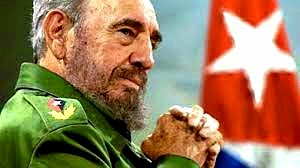
Fidel Castro
Cuba was and is the classic Soviet-style Communist regime. During the 1970s Fidel Castro dispatched troops to Soviet-supported wars in Africa. Cuba’s economy was always lean and its workers make about twenty dollars a month in U.S. dollars.

In 1962 Cuba was suspended from the Organization of American States (OAS) that imposed sanctions against Cuba, but 1975 the OAS lifted its sanctions with the approval of sixteen member states and the U.S. but the U.S. has maintained its own sanctions from the days of the missile crisis.

Suffice to say Cuba has a long history of human rights abuses. It represses any political dissent and life for Cubans is devoid of free speech, free association, privacy, and due process of law; rights which Americans and others in free nations take for granted.

For some 53 years, the U.S has had no direct diplomatic relations with Cuba and when President Obama made the announcement that he was moving to normalize relations it was big news. It had been preceded by 18 months of secret negotiations about which, reportedly, no member of Congress was informed about.

While it infuriated the Cuban-American communities most people, inside and outside of government agreed it was time, if not overdue, for this action.

There will be much speculation that normalization will be good news for the Cuban people and one can surely hope so, but until the brothers, Fidel and Raul—declared the new president in 2008 when Fidel resigned—are dead, the likelihood for any real improvement in their lives is distant.

In a similar fashion, many American business and agricultural interests are no doubt making plans to become a part of the Cuban economy, but they had better proceed with care. Cuba is still Communist in most respects despite Raul Castro’s efforts to portray himself as a reformer and Cuba a place where foreign business are welcome and can thrive.

In 2012 he relaxed property rights, expanded land leases, and licensed businesses from pizza joints to private gyms.

In reality, Raul Castro has, as reported in McClean’s magazine in 2012, “scared off more joint ventures than he has attracted, jeopardizing the investment Cuba needs to succeed. Spanish oil giant Repsol quit the country. Canada’s Pizza Nova, which had six Cuban locations, packed its bags, as did Telecom Italia.”

In one case after another, those who hoped to do business in Cuba were disappointed. In 2013 a British company, one of the biggest and most important business partners of Castro’s military and a key investor in the tourism industry was suddenly confiscated and its principals were imprisoned.

One dramatic example is Stephen Purvis, a British architect who, since 2000 had developed tourism projects, factories and docks through his company that was financed by private European backers. After living in Cuba for ten years with his family and investing heavily in it, he was rewarded by being imprisoned after being accused of spying.

He would spend 16 months in Cuban jails until being able to flee. Everything his company owned was confiscated. He has since warned others against doing business with the Castros.

Since 1959, more than one million Cubans, about ten percent of the population, have fled Cuba, many of whom found a new home in America. When that many people wanted to leave, it tells you something is terribly wrong with life in Cuba.

The tentative steps toward normalization after all this time are necessary, but the American government should proceed with care in the years ahead.
_____________________________

Become a Truth Serum Partner Now

A happy Christmas for the Castros

A happy Christmas for the Castros from Jeff Jacoby at the Boston Globe

Normalized diplomatic ties with the United States will give the
Castro brothers even more reasons to smile. But President
Obama's sharp change in policy won't bring liberty any
nearer for Cuba's 11 million people.
After five years in a Cuban dungeon, American aid contractor Alan Gross was finally freed Wednesday, his release part of a deal to restore full diplomatic relations between the United States and Cuba.

But there will be no freedom for the many thousands of Cuban citizens locked in the Castros' prisons — not even after a US embassy is reopened in Havana.

The United States has always had diplomatic ties with nasty regimes. In that sense, President Obama's announcement last week that he intends to normalize relations with Cuba merely adds another to the list. But Cuba isn't just another dictatorship.

To begin with, it is the only remaining totalitarian state in the Western Hemisphere. The Castro brothers' regime "continues to repress individuals and groups who criticize the government or call for basic human rights," notes a recent Human Rights Watch summary of conditions on the island.

"Officials employ a range of tactics to punish dissent and instill fear in the public, including beatings, public acts of shaming, termination of employment, and threats of long-term imprisonment."

There is no freedom of speech or religion in Cuba, no due process of law, no right to criticize the government. Nor is there any right to leave, which is why so many Cubans have lost their lives at sea, drowning in desperate attempts to escape.

If the president's abrupt shift of policy were part of an American strategy to topple such an odious dictatorship, it might be defensible. Unfortunately, it is hard to see this as anything but one more iteration of the Obama administration's idea of statecraft: Accommodate the world's worst actors and consciously reduce America's clout in shaping international opinion.

The Cuban regime is one of the few with which Washington severed ties on a fundamental matter of principle, having first welcomed its accession to power. The United States initially supported the Castro revolution — early in 1958 the Eisenhower administration imposed an arms embargo against Cuban dictator Fulgencio Batista, and it swiftly recognized the new government in 1959.

It wasn't until 1961 that President Eisenhower cut diplomatic relations with Havana, and that was only after Castro had seized private property and nationalized (read: stole) billions of dollars' worth of assets belonging to US companies in Cuba. More than half a century later, that massive larceny is still not repaid.

Obama dismisses this as mere history. He pooh-poohs the relevance of a policy "rooted in events that took place before most of us were born."

Yet as a candidate for president, Obama vowed that his policy toward Cuba would "be guided by one word: Libertad." He bent over backward to stress that while he favored engagement, there would be no quid of normalization until there was a quo of democratization: "Don't be confused about this," Obama told voters in Florida

"I will maintain the embargo. It provides us with the leverage to present the regime with a clear choice: If you take significant steps toward democracy, beginning with the freeing of all political prisoners, we will take steps to begin normalizing relations. That's the way to bring about real change in Cuba."

That was then, this is now. As in almost every other region touched by Obama's foreign policy since 2009, liberty in Cuba has made no gains. Leverage has not been deployed. Political prisoners remain behind bars. And significant steps toward democracy remain a fantasy.

Obama isn't the first president to find ways to ease trade and travel sanctions against Cuba. But the increased business — US agricultural exports to Cuba soared from $4 million in 2001 to more than $450 million in 2010 — has mostly entrenched Cuba's rulers.

Easing them further will entrench them even more. That is because the Castro regime, in addition to its other charms, is a criminal syndicate. It controls Cuba's tourism and foreign trade operations much as Al Capone controlled Chicago's liquor rackets.

When foreign currency flows to Cuba, it flows to the dictatorship and its military. As Rich Lowry commented in Politico last week, it is as if the Pentagon owned the Radisson, Marriott, and Hilton hotel chains.

Despite the president's warm-and-fuzzy rhetoric about the Cuban people's right to "live with dignity and self-determination," nothing about this normalization reflects the least concession on Havana's part. For decades, Obama said, the United States has "proudly. . . supported democracy and human rights in Cuba."

But there is no hint that human rights or political freedoms will improve for ordinary Cubans. An end to Communist Party control? Contested elections? An unmolested free press? Don't hold your breath.

Echoing a popular talking point, the president claims that America's longstanding policy toward Cuba hasn't "worked," by which he apparently means that Cuba is still a crude and brutal tyranny. "For more than 35 years, we've had relations with China. . . Nearly two decades ago, we reestablished relations with Vietnam," Obama says — as if that supports, rather than undermines, the notion that normal diplomatic and trade relations with Communist dictatorships will transform them into humane and democratic societies.

Normalization hasn't "worked" in Vietnam or China. Why expect a different outcome in Cuba?

There have always been reasonable arguments on both sides of America's fraught Cuba policy. But there is nothing reasonable about Obama's drastic shift of policy. It amounts to an invaluable gift to the worst regime in the Americas, in exchange for no lasting gain in human rights, democracy, or libertad.

This will be a happy Christmas for the Castros and their courtiers, who are getting something they have long desired. As for their millions of beleaguered subjects, still unfree and impoverished:

They'll have to go on waiting.
_____________________________

Become a Truth Serum Partner Now