Showing posts with label larry kudlow. Show all posts

Monday, June 15, 2015

Randy Richardson: Conservatism’s Banker

Click Here to Visit the Kudlow and Company Website

He dedicated his life to the values and virtues of freedom from the files of Larry Kudlow at Kudlow and Company
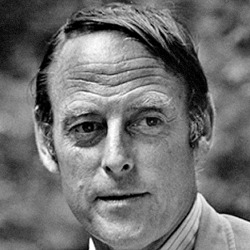
R. Randolph (Randy) Richardson
Just as the great William F. Buckley Jr. laid the intellectual foundation for the rise of modern conservatism, philanthropist R. Randolph Richardson set down the financial foundation of the new conservative movement. But Randy Richardson, who died May 25 at the age of 89, is not a household name. He was a low-key guy who stayed out of the limelight, and he made a habit of giving credit to others. But like Buckley, he was a firm believer in a free society, free markets, and a strong defense to defeat communism. And the mark he made on the conservative movement is deep and lasting.

For two decades he was president of the Smith Richardson Foundation (SRF), which funded an incredible array of conservative institutions and people. SRF literally changed the U.S. political map such that the principles of conservatism came to completely dominate liberalism and expose all its flaws and failures.

To understand the incredible scope and power of SRF from the early 1970s to the early 1990s, you need only look at the list of institutions financed by Randy Richardson: the Heritage Foundation, the Hoover Institution, the American Enterprise Institute, the Manhattan Institute, the Intercollegiate Studies Institute, the Federalist Society, the Foreign Policy Research Institute, the Law and Economics Center, the Institute for Educational Affairs, the Committee for the Free World, the Center for Individual Rights, the National Humanities Center, the Conservative Book Club, The Public Interest, The American Spectator, and The New Criterion.

SRF also supported Freedom House, helped fund Radio Free Europe and Radio Liberty, and founded Radio Martí and the Atlas Economic Research Foundation.

Randy Richardson also made important contributions to supply-side economics, again going under the radar. He put up seed money for Jude Wanniski and his path-breaking book, The Way the World Works. He assisted supply-side economists Lew Lehrman and George Gilder and a congressional supply-side workshop directed by Bruce Bartlett. He funded Michael Novak’s The Spirit of Democratic Capitalism and Jean Kirkpatrick’s research on dictatorships. He put money into Milton Friedman’s Free to Choose television production and Harvard programs from Chris DeMuth (regulatory policy) and Sam Huntington (foreign policy).

On June 11, at the Fifth Avenue Presbyterian Church in New York City, in front of hundreds of friends and supporters, Heather Richardson Higgins said in her tribute to her father that his was “a life that made a difference.” Heather, by the way, is keeping up the family’s conservative philanthropic flame as president of the Randolph Foundation. And she pointed out that a full 66 people who had been SRF grantees went on to significant positions in the Ronald Reagan administration.

And Leslie Lenkowsi, a key figure as director of research at SRF, and now a professor at Indiana University, added “No other conservative foundation had more bang for the buck.” In today’s dollars, SRF put out about $10 million a year from a modest $200 million asset base. But look at its extraordinary accomplishments.  

There’s one more important piece to the Randy Richardson story. Though he rarely talked about it, Richardson served in World War II under General George Patton, and saw action in the brutal Battle of the Bulge, which really put the final nail into Hitler’s coffin. Why is it that so many World War II vets -- including my own father, who died last January, and who served as an Army Air Corps navigator dropping bombs over Germany and Italy -- never talked about their military service? That heroic service delivered the freedom we know today. It was a monumental achievement. It defeated Nazism, fascism, and ultimately communism. It changed the tide and hinge of history.

Simply put, our freedom came from the bravery and character of men like Randy Richardson. And from that freedom comes the godly virtues, values, and responsibilities that preserve the conservative Western traditions that make life worth living today.

Knowing Randy as I did, I have come to believe those godly virtues and values were deeply embedded in his soul. And so it should not be surprising that he undertook so many noble causes during his life.

As a Reagan supply-sider who believes fervently in free markets, free societies, and the founding virtues of life, liberty, and the pursuit of happiness, I want to thank Randy Richardson. All Americans are indebted to him -- to his character, his knowledge, and his unshakable beliefs.

May he rest in peace.
_____________________________

Become a Truth Serum Partner Now


Monday, May 4, 2015

Zero inflation holding the economy together

Free trade will give it a strong boost by Lawrence (Larry) Kudlow at Kudlow and Company

Visit Larry at the Kudlow and Company Website

Meet Larry Kudlow
Don’t expect any miracles from the economy. But don’t expect a collapse either.

In political terms, it’s kind of a Mexican standoff. Team Obama says they saved us from another Great Depression. And they point out that 3.1 million jobs have been created in the last 12 months.

Republicans counter that this is the slowest post-WWII recovery on record and that real GDP is roughly $2 trillion below potential. They add that the labor-force participation rate is 62.7 percent, a 39-year low, and that there are at least 15 million people who work but can’t get jobs.

Yet both sides may actually come together for a major pro-growth initiative: an Asia-Pacific free-trade deal that will lower tariffs and other barriers. Lower tariffs are lower taxes.

Democratic labor unions don’t like this. Neither do isolationist Republicans. They both think American wages and jobs will be damaged. But as House Ways and Means chair Paul Ryan argues, free trade is a positive sum -- both sides benefit -- not a zero sum.

Export-related jobs typically create higher wages. And one-in-five American jobs depend on trade. Moreover, the spread of market capitalism and free trade in China, India, Vietnam, South America, and parts of Africa has lowered dollar-a-day abject poverty by 80 percent over the past three decades. (Pope Francis, take note.) And with hundreds of millions of people entering the global middle class, America’s low-cost producers are seeing their markets expand.

Of course, a strong corporate tax cut, on a territorial basis, with easy repatriation of overseas profits, would give U.S. businesses large and small even lower costs and greater competitiveness. But the corporate tax cut is not going to happen -- at least until after the 2016 election.

So we’re left with a trade deal that may well happen. President Obama is working with Republicans to persuade Democrats to come on board with trade. Obama deserves credit.

Meanwhile, back to the economy, real-GDP (RGDP) growth was barely above water at 0.2 percent in the first quarter. Bad winter weather undoubtedly played a roll. But consider this: A year ago we had a decline in economic growth of 2 percent -- again, largely due to the weather -- but the next two quarters rebounded by nearly 5 percent.

So if you look at four-quarter trends for perspective, RGDP actually rose 3 percent over the past year. And business investment increased nearly 5 percent, despite a big cutback in energy-company capex.

In addition, exports over the past year increased 3 percent and imports 5.5 percent. People keep telling me the strong dollar is killing our exports. But they forget two things: King Dollar has led to across-the-board price drops, boosting consumer and business real incomes. And if exports keep slowing, blame the lack of production out of Europe, China, Japan, and elsewhere.

And you can’t overlook the very core of the American economy: private consumption plus private investment (C + I). It’s been rising at roughly 3.3 percent year over year for the past several quarters. Not bad. And profits and stock markets hover near record highs.

Then there’s the most underrated factor in today’s economy: zero inflation. This is totally pro-growth. It’s a tax cut.

The Fed’s monetary machinations haven’t worked. The M2 money supply has hovered around 6 percent for years, with nominal GDP (NGDP) around 4 percent. The monetarist experiment went nowhere. And that’s a good thing, as excess bank reserves never circulated through the economy and the velocity (turnover) of money continues to fall. But the strong greenback is holding prices down, including energy. Gold prices have been stable for years.

So NGDP at 4 percent with zero inflation leaves room for 4 percent real growth. It’s a good spot for the economy. But if the Fed had its way and raised inflation to 2 percent, RGDP might be crowed out to 2 percent or less. Why do we want that?

Paul Volcker used to argue that low inflation increases real growth. He was right. But Ben Bernanke and Janet Yellen argue that higher inflation increases real growth. They are wrong.

American economic growth has fallen way behind its long-term performance trend. Instead of 2 percent growth we need 4 or 5 percent.

This leads me to a final thought: It was Arthur Laffer and Robert Mundell who created the ultimate pro-growth mix of monetary and fiscal policy. Keep the dollar sound for price stability and reduce marginal tax rates to rejuvenate supply-side incentives.

That mix worked in the JFK 1960s and in the Reagan-Clinton 1980s and 1990s. Add in a strong dose of free trade and deregulation, and the Laffer-Mundell hypothesis will return us to our long-term economic path and renew American leadership worldwide.

Question is, will the GOP take that growth model and run with it?
______________________________________________

Become a Truth Serum Partner Now

Friday, April 10, 2015

The worst foreign policy of my lifetime

Tougher sanctions are necessary to force Iran to change its terrorist ways and Obama’s grand-bargain Iranian vision is creating a powder keg says Larry Kudlow

Visit the Kudlow and Company Website

Meet Mr. Larry Kudlow
If recent news accounts are to be believed, the framework of agreement between the U.S. and Iran is on the rocks. Iran’s top officials, Supreme Leader Ali Khamenei and President Hassan Rouhani, are saying economic sanctions must end immediately and that UN inspectors will not be granted unfettered access to military installations and nuclear construction sites.

But this may be nothing more than Iranian domestic political spin. And as long as there’s a potential deal, a critical point needs to be made - There is no provision for, or even discussion of, putting political restraints on Iran.

That is, there is nothing in this deal that would force Iran to change its terrorist ways.

Iran will continue to be the number-one state sponsor of terrorism in the Middle East, no matter what the deal.

How can this be?

Writing in the Wall Street Journal, Henry Kissinger and George P. Shultz make a crucial point: “Absent the linkage between nuclear and political restraint, America’s traditional allies will conclude that the U.S. has traded temporary nuclear cooperation for acquiescence to Iranian hegemony.” (Italics mine.)

Put another way, there could be a U.S.-Iran deal that postpones Iran’s nuclear weaponization for ten or more years. But tomorrow, and the day after, and the day after that, Iran will continue to sponsor its terrorist proxies, like Hamas in Gaza and Hezbollah in Lebanon, keep proxy troops in Syria, continue its efforts to take over Iraq, further its designs on Yemen, and confront Sunni Saudi Arabia. And don’t forget, the U.S. has labeled Iran’s own Quds Force and Revolutionary Guard as terrorists.

Kissinger and Shultz write, “Iranian or Iranian client forces are now the pre-eminent military or political element in multiple Arab countries . . . With the recent addition of Yemen as a battlefield, Tehran occupies positions along all of the Middle East’s strategic waterways and encircles archrival Saudi Arabia, an American ally.”

No one doubts these facts. Iran wants to dominate the Middle East. And it will not acknowledge the rights of the sovereign state of Israel. So the question is: Why is the U.S. not including political- and terrorist-restraint clauses in any Iran deal?

This is why economic sanctions are crucial. Western-nation sanctions are slowly but surely smashing the Iranian economy. We have effectively stopped the flow of money and oil for Iran. The Iranian budget, which dominates the state-run economy, needs $130 a barrel. Today’s $50 price is an economic killer.

So why doesn’t Team Obama directly link a removal of economic sanctions with a clear pullback of Iran’s terrorist activities and march to Middle East dominance? That’s a daily linkage -- one that is observable. And since we know Iran won’t agree to this, why aren’t President Obama and Secretary of State John Kerry working to tighten sanctions on Iran rather than push through a bad nuke deal?

Make no mistake, the nanosecond sanctions are lifted U.S. and Western investment will pour into Iran. Looser financial sanctions will put an estimated $50 billion into Iran’s economy. And a number of European oil companies will jump to develop the world’s fourth-largest proven oil reserve and second-biggest national-gas reserve.

Italy’s Eni, Royal Dutch Shell, France’s Total, Norway’s Statoil, German’s Siemens, and French car companies Peugeot and Citroën are ready to move. It’s reported that Boeing is looking to do business in Iran. HP and Google have been exploring contracts and licenses in Iran. Other major U.S. and European Internet companies have been approached by Iranian officials. And financial-service and credit-card companies will move in quickly.

And if American officials really believe treaty violations can be countered by a “snap-back,” they’d better think again. These complex sanctions, which took so long to put together, will never be effectively revived.

General Jack Keane believes President Obama has had a grand-bargain vision for Iran since 2009. The nuclear deal is just one part of it. That’s why Obama gave no help to the million Iranian reformers who marched in protest of the phony 2009 elections. That’s why Obama didn’t help the Syrian rebels, why he’s had such a cold relationship with Israel, why he gave speeches blaming America for Arab unrest, and why until very recently he didn’t give any help to Egyptian president al-Sisi.

Obama believes in détente with Iran as a pathway to U.S. disengagement from the region. But Iran is our enemy, whether the president believes it or not. And if we cut deals that allow Iran to continue its terrorist and hegemonic activities, the Obama administration will have created an unbelievable Middle East powder keg, setting the stage for a conflict that could possibly dwarf any we’ve seen before.

This is the worst U.S. foreign policy of my lifetime. It may be the worst in America history.
_____________________________

Become a Truth Serum Partner Now

Thursday, March 12, 2015

The dog ate my homework - Hillary

Hillary’s Judgment Problem from the files of Lawrence (Larry) Kudlow at Kudlow and Company

Visit the Kudlow and Company Website

Meet Mr. Larry Kudlow
Hillary acknowledging that it would have been better to use two e-mail accounts is about as close to an apology from the Clintons you’ll ever get. But the matter of “convenience” is just nonsense, as everyone knows. Even a tech dinosaur like myself has two e-mail accounts, which I now access on my spiffy new iPhone 6 Plus. (By the way, instead of that old Blackberry, Hillary should have had an iPhone).

So Hillary says she didn’t break any White House or State Department rules. I don’t think that defense will fly. And the homemade server, created for messages between Bill and Hillary, is an absolute non-starter. Apparently Bill has only sent two e-mails in his life — and neither of them to Hillary.

There’s also a dog-ate-my-homework quality to this Clinton episode, with Hillary saying: Sorry, I deleted the remaining 30,000 or so e-mails, so I just can’t show them to you.

But those e-mails are out there in some cloud, or in some hard drive, or somewhere else. And Hillary has plainly stonewalled any proposals to have an independent counsel cull through the remaining e-mails.

Frankly, I don’t believe any part of that story — how many e-mails she sent to the State Department, or how many are left. Just not credible. And this whole deletion thing is so Nixonian. Remember Rose Mary Woods and those mistakenly erased 18-or-so minutes of Watergate tape? Is it possible that Hillary is Nixon’s political daughter, or at least his niece?

And then there’s the business about the Secret Service monitoring security threats from cyberspace hacking. Just doesn’t fly. How do we know? Is the Secret Service going to issue a press release? Do we really believe they were involved in Hillary’s homemade server in Chappaqua?

Please.

And what about the former ambassador to Kenya, the guy who Hillary fired because he was using personal e-mails. She denied it today, but he’s out there giving interviews.

I’m no lawyer, so I can’t tell if any laws were broken. And it sure seems like she broke some White House and State Department rules. But to me the real issue here boils down to judgment.

Hillary’s homemade server system was clearly a security threat. That classified information essential to American protection could be cyber-hacked by Russia, China, North Korea, or Iran is something she obviously should have considered before she went ahead with this crazy scheme. And the notion that we are to believe there was no classified material in her personal e-mails, which included her government e-mails, defies all credulity.

This is bad judgment. It’s especially bad judgment for a future president. The American public knows this. And really, so does she.
_____________________________

Become a Truth Serum Partner Now

Monday, March 9, 2015

Captain Rick Perry - Presidential candidate

Time for a military man in the White House? By Lawrence (Larry) Kudlow at Kudlow and Company

Visit the Kudlow and Company Website


Meet Larry Kudlow
“More than any election since 1980,” ace pollster Kellyanne Conway tells me, “2016 will be a national-security contest.” And she says former governor Rick Perry may have the best chance to convince voters that he can be commander-in-chief.

Let’s think on that. With the world in turmoil, who do you really want sitting across the negotiating table from Vladimir Putin, the Iranian mullahs, or the Chinese? How about a military man to command the war to destroy radical-Islamic jihadism?

Very few people know that between 1972 and 1977, Perry served in the U.S. Air Force, flying C-130 tactical aircraft in Europe and the Middle East. He is the only current GOP candidate to have worn the military uniform. And he rarely talks about it.

Perry’s childhood goal was to learn to fly. He went into the Air Force after graduating from Texas A and M. And he ended his five years of service with the rank of captain. As Perry would say on other subjects, “That matters.”

The Perry story usually revolves around the Texas economic-growth miracle. But the military service? The captain’s rank? The piloting of strategic-airlift planes? That’s hardly known. And in his 14 years as governor of the Lone Star state, plenty of national-security issues (and border-security issues) came across his desk.

So imagine this: A president who actually served in the regular military. A president who understands the military, listens to the military, and has good relations with the military -- the opposite of the Obama experience.

And imagine having a president who looks forward to the daily intelligence briefing, completely unlike Obama. What a change.

Perry spoke last week at a small dinner in New York City. Few there knew Perry had worn the Air Force uniform, much less that he held the rank of captain. But as he addressed the 50 or so at the dinner, it showed. It showed in his ramrod-straight posture. It showed when he described his tough foreign-policy views and opposition to Obama’s national-security policies. And it was unmistakable when he so easily discussed the constant need for “a show of force.”

Haven’t heard that phrase from anyone lately. My wife, whose father was a career Air Force officer, describes “a show of force” as something to intimidate the enemy. She says it means: We’re here, we’re stronger, and we could really hurt you. You might recall that during the Cold War, hundreds of C-130s flew over Europe as a show of force against Soviet aggression.

At the recent CPAC conference, Perry devoted nearly two-thirds of his speech to national-security issues. He described a simple truth about current U.S. foreign policy: “Our allies doubt us and our adversaries are all too willing to test us.” He sees ISIS and the whole radical-Islamic-jihadist movement as the worst threat to freedom since communism.

In his New York talk, he expressed concern that our military is hollowing out. He’s actually running an ad on the Internet about the need to strengthen American national security. No other candidate is doing this.

Perry also strongly supports Israeli prime minister Benjamin Netanyahu. From what we know of the Obama Iran deal, it looks like a very bad deal indeed. And Perry draws attention to how Team Obama has backpedalled on a number of Iran-deal issues, with the result that Iran could be allowed to build nuclear weapons while boosting its economy.

Perry says: No, Iran must not be allowed to develop nuclear weapons. He says: No, the U.S. should not normalize relations with Iran until Iran ceases to support terrorist groups that ultimately will target the U.S. and its allies.

Finally, Perry has adopted the Reagan model whereby America must be economically strong in order to be internationally secure.

Unlike his military credentials, his role in the Texas economic miracle is well known. While Perry was governor, low taxes, deregulation, and tort reform led to the creation of nearly one-third of the new private-sector jobs in America. He’s a Tenth Amendment man. He loves it when states compete against each other to create a climate of risk-taking and growth. And he wants to bring the Texas economic model to Washington.

Now, it’s way too early to endorse anyone for the GOP nomination. That’s not my intent here. But it’s important to bring out the facts about all the Republican presidential candidates. And most of you might only know half the story about Rick Perry. He’s an economic miracle worker, but he’s also a military man with national-security credibility.

And in typical military fashion, he’s an optimist. Perry has faith. And he believes America’s best days are in front of us.

Sounds like a show of force.
______________________________________________

Become a Truth Serum Partner Now

Sunday, January 4, 2015

America is better than it has shown

Optimism for 2015 by Larry Kudlow at Kudlow and Company

Visit the Kudlow and Company Website

America is better than it has shown

Meet Larry Kudlow at Kudlow and Company
Politics and the economy are both looking up. President Obama’s big-government spending, planning, and executive-branch overreach were crushed at the polls. Elections matter. The GOP has been rejuvenated. Republican governors will lead the way.

And the Republican majorities in the House and Senate haven’t been this big since the 1920s. They know what to do -- develop a positive agenda: Pro-growth tax reform and spending limits. Pro-energy. Pro-King Dollar and Fed monetary reform. Pro-health-care choice. Pro-immigration reform. Pro-marriage. Pro-family.

An American renaissance is in the making. Let the GOP put its best policy foot forward. If Obama vetoes the growth reforms, so be it. The 2016 agenda will be set for a Republican presidential victory.

So why can’t 2015 be an optimistic year? The psychology of pessimism and negativism that has engulfed America for so many years can melt away.

Retiring senator Tom Coburn recently told me that America is a better country than it is showing. I believe we are now poised to show it.

Inside the economy, things are looking better. Thanks to the fracking revolution, free-market forces have led to a halving of oil prices, to the enormous benefit of consumers and businesses. While our production cost structure for goods and services has plunged, America has become much more competitive.

Yes, inside the energy sector, there will be displacements. Marginal producers may fall away or consolidate. Extraordinary energy profit margins will normalize. There may even be some debt defaults.

Economist Scott Grannis estimates there’s about $180 billion of high-yield energy debt. But only about $30 billion will likely default. That’s a tiny fraction of $5.1 trillion in high-grade corporate debt, an even smaller fraction of $28.3 trillion in U.S. Treasury-, corporate-, and mortgage-debt market value, and a small piece of $23.4 trillion in U.S. equity-market value.

Forget the naysayers. There is no systemic energy banking risk that’s comparable to the 2008 meltdown. Not even remotely. The energy supply shock is unambiguously good.

And lurking behind the energy-price drop (AAA gasoline nationwide is about $2.20, a buck less than a year ago), don’t forget $3 natural gas, which is increasingly gaining energy-market share. And don’t forget the economic destruction falling bomb-like on our oil-producing enemies in Russia, Iran, and Venezuela. The energy fracking revolution has done for national security what President Obama seems incapable of doing.

And don’t forget the economic power of the rising dollar. King Dollar is at an eleven-year high. It’s attracting capital from around the world. It’s holding down inflation. It’s providing major new purchasing power for consumers and businesses. Lower production costs and commodity costs will increase our exports and give us more buying power for the purchase of imports. All this helps the global economic recovery.

Most people have this story wrong. It’s not Europe and Japan that are going to hold the U.S. down. It’s a resurgent U.S. that’s going to build them up -- despite all their structural policy mistakes.

Also inside the economy, business investment is improving, housing is slow to recover but is recovering, and wage and salary income is growing at 4.5 percent. Less 2 percent on consumer prices, that leaves over 3 percent of real spending power. Not fabulous, but good.

Looking at Treasury bond yields, real rates are rising -- a sign of better growth -- while inflation fears are declining. Banking risk indicators, like 2-year swaps spreads, are very low. And profits, the mother’s milk of stocks and the lifeblood of the economy, stand at a record-high share of GDP and are likely to keep growing in a 5 to 10 percent range.

Fortunately, the Fed’s QE balance-sheet expansion never really worked. Excess bank reserves never circulated throughout the economy. The money supply has been quiescent. And that’s a good thing, because if QE had worked, the inflation rate could be 10 or 15 percent instead of less than 2 percent.

Meanwhile, the federal government’s spending size has dropped from near 25 percent of GDP to less than 21 percent of GDP. Obama’s so-called spending stimulus has been stood on its head. In the early years more spending generated less growth -- the worst recovery since WWII.

But in recent times less spending is producing more growth -- probably toward a 3 percent trend. (We need roughly 4 to 5 percent growth in the years ahead to reclaim America’s 70-year average of 3.5 percent.)

A final optimistic thought: A big tax cut for large and small businesses combined with King Dollar is the exact supply-side-growth mix that generated booms in the 1960s, ’80s, and ’90s. We can do this.
______________________________________________

Become a Truth Serum Partner Now